Rio gave me warmth.
Brazil is in everything I make. The color, the closeness, the belief that you feel beauty long before you can explain it.
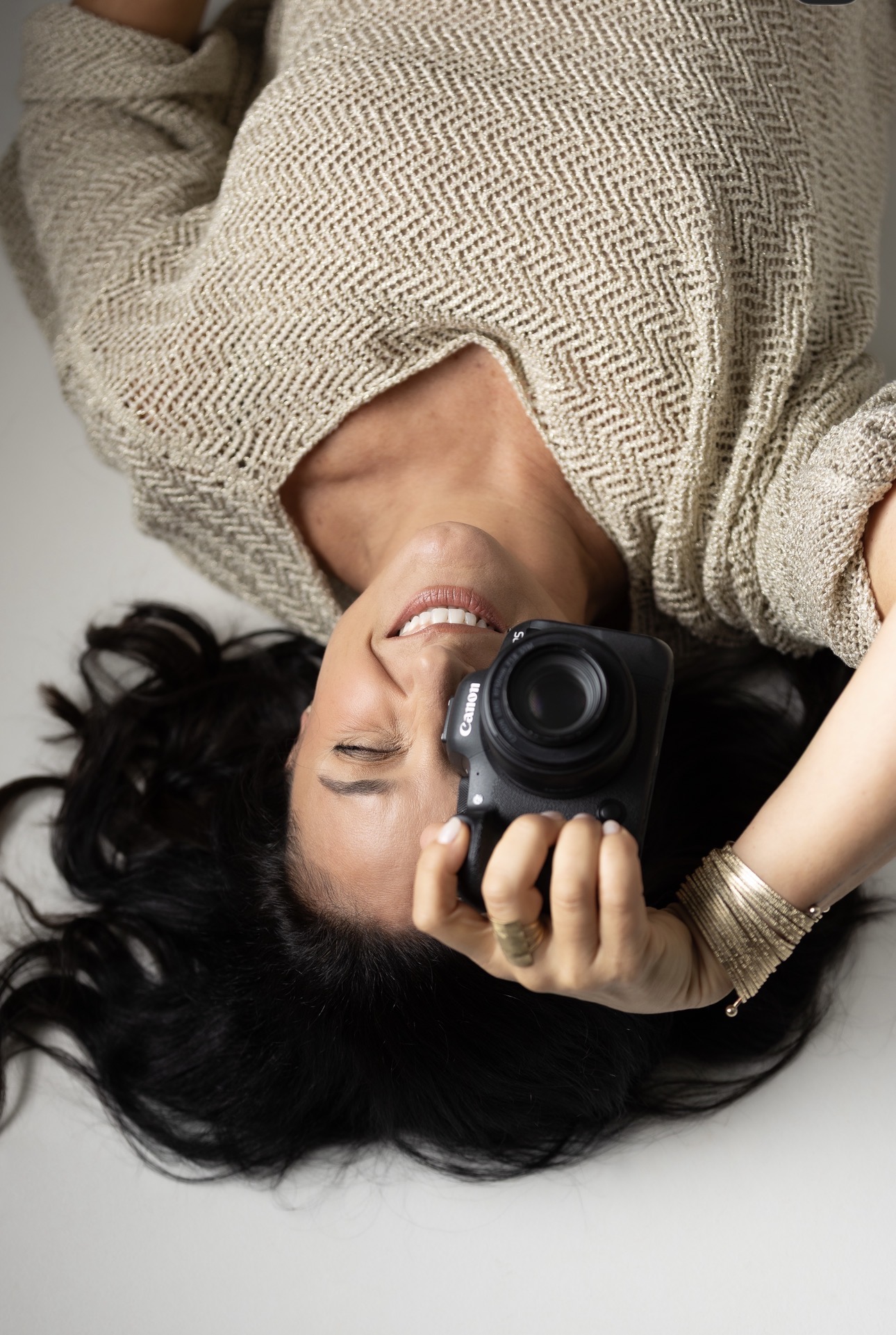
I picked up a camera at 45 and everything before it finally made sense. Rio, fashion, motherhood, all of it.
The short version: I notice people
I grew up in the mountains outside Rio de Janeiro, in a house full of color and noise and people who taught me to pay attention. I came to the United States in the early nineties, studied Art History at Syracuse, and spent four years looking at how painters decide where your eye should land. I didn't know it was training. It was.
Then came ten years in fashion. That decade taught me to see: the line of a sleeve, the light that flatters, the half inch of chin that changes a whole face. It also taught me what it costs women to be told there's one correct way to look. I watched that up close for a long time, and I never got over it.
After that I spent fifteen years raising my family, and I'd choose it again without blinking. But when that chapter loosened I was 45, my kids were building their own lives, and I couldn't quite remember what mine was supposed to be. So I bought a camera. I started photographing the women around me, mostly because I had all this attention and nowhere to put it.
In 2016 I opened a studio south of Atlanta. The first time I handed a woman her own portrait and watched her go quiet, then look again, I understood what I'd walked into. She wasn't admiring a picture. She was meeting herself. I hadn't found a job. I'd found the thing I'm here to do.
Almost every woman who books me arrives with some version of the same sentence. When I lose fifteen pounds. When my hair grows out. When work slows down. When I feel more like myself again. She's been waiting to be photographed the way you wait for permission, and while she waits, the years pass with no pictures of her in any of them. Her children will inherit a family album she isn't in.
So my mission is simple, and I take it seriously. I want women of every age and every walk of life to see themselves clearly and to like what they see. Not a filtered version. Not the version from ten years ago. The woman standing in my studio today, in the body she has today, with the life she's actually living.
It's why I built the studio the way I did, slow and private and calm, with no audience and no rush. It's why I direct every single frame, so nobody is ever left standing there wondering what to do with her hands. It's why I started Beauty is a Feeling, photographing and interviewing women over 40 about what beauty means to them once they stop taking the answer from a magazine.
And honestly, it's personal. I started over at 45. I know what it's like to look in a mirror and not find yourself in it, and I know what changed for me when someone finally showed me what they saw. I've been chasing that moment for other women ever since.
Beauty isn't a look you achieve. It's a feeling you recognize. My job is to build you a place to feel it, then hand you a photograph that proves it was real.
Conversations, features and interviews about the work, the studio, and why any of it matters.
None of it was wasted. Every piece of it shows up in how I photograph you.
Brazil is in everything I make. The color, the closeness, the belief that you feel beauty long before you can explain it.
Ten years of studying light, shape and posture. Nothing in my frame is there by accident, and I'll move a shoulder half an inch to prove it.
Fifteen years of paying close attention to people I love. It changed how I hear what someone isn't saying out loud.
Art, instinct, direction and care, finally in one place. And a way to hand you the version of yourself I can already see.
I don't photograph a perfect version of you. I photograph the moment you stop trying to perform one.Leticia Andrade · Portrait Photographer
A photograph can be beautiful and still be honest. I'm not after perfect. I'm after the moment you recognize yourself.
I always ask one more question and take one more frame. That's usually where the real picture was hiding.
Being seen asks something of you. My job is to make the room safe enough that you don't shrink when it does.
I watch how you feel, not just how you look. When you feel safe your shoulders drop. That's when I start shooting.
The movement that grew out of all this. It celebrates you now, not after the weight loss, the promotion, or whoever's permission you're still quietly waiting for.
Ten years behind the camera. More than 400 women. I'd love for you to be next.
Start a conversation